The Boundaries of Objectivity
Exploring a Problem Space with Darren Lott
Keys to the Kingdom
Consciousness is the Least Important Function of Your Brain November, 2026
This article builds on the model introduced in "Kingdom of Mind." The Kingdom model is a level-up from Sigmund Freud's theory of the subconscious and from Marvin Minsky's "Society of Mind." Comparing a feudal system to agents of the mind is not just a cute metaphor. In fact, the success of Medieval Kingdoms may have come from a pattern already in the minds of its implementors.
Philosopher Stones
Not All that Glitters June, 2026
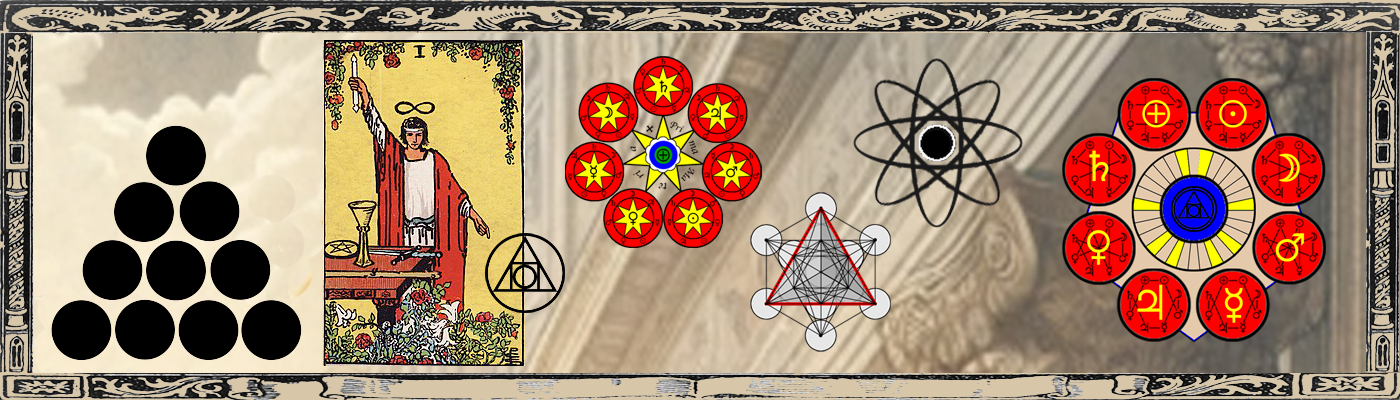
Until I stumbled across Isaac Newton's unpublished writing on Alchemy, I really had little interest in what I considered a failed pseudo science. The Philosopher's Stone seemed like other mythical objects that have a basis in human desire, but not in reality. There is an actual Boundary of Objectivity, and I believed history had sorted the Philosopher's Stone irrevocably to the subjective side. Alchemy is pursued today only as "spiritual alchemy."
This article provides a conclusion to the Prime Clock Odyssey.
ARCHIE and the Automata
The Emergence of Complexity April, 2026
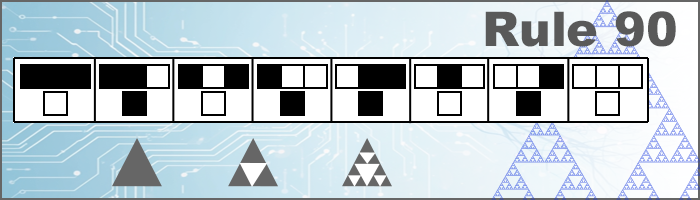
The 20th Century saw many of the greatest minds attempt to map biological structures to simple mathematical formulas. Turing (1952) linked iterative calculation to patterns on animal shells and hides. Ulam and von Neumann (1949) used Cellular Automata (CA) to help explain self-replication. And Ulam (1962) expanded the CA model to speculate about the developing morphology of plants.
Blocks World
The Foundation of Artificial Intelligence January, 2026
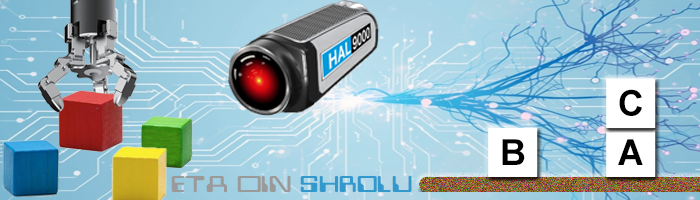
One of the earliest Artificial Intelligence challenges was to manipulate toy blocks using a robot arm. The AI lab at MIT pioneered this work starting in the late 1950s. The simplicity of Blocks World categorizes it as a "toy problem" yet even today it remains another "NP-hard" search and planning problem. After defeating the Tower of Hanoi, can ARCHIE crush this puzzle too?
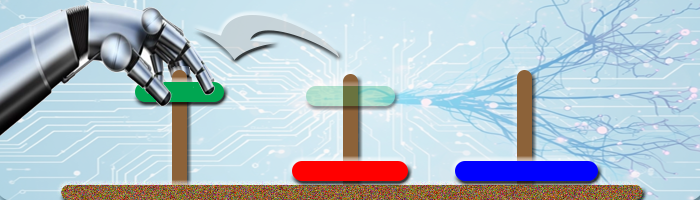
Illusion of Thinking
One Puzzle to Rule Them All December, 2025
Large Reasoning Models (LRMs) claim to use a revolutionary architecture that "reasons" through scenarios, similar to how human problem solvers operate. Apple released a paper ("The Illusion of Thinking") that disputes this claim. The paper concludes by "ultimately raising crucial questions about their true reasoning capabilities." I pushed ARCHIE to see how well it can do on a similar benchmark problem.
Kingdom of Mind
Path to AGI Ends in a Cornfield October, 2025
By 1957-58, the seeds for the greatest division in AI had already been sewn: Symbolic AI, as exemplified by Newell and Simon's General Problem Solver (1957), and Probabilistic AI, as exemplified by Papert's Perceptrons (1958). By the 1980s, the Symbolic AI movement had stalled, and after a very late start Probabilistic AI has also stalled. Over half a century later, neither approach have even provided definitions for their highest goals: Intelligence and Consciousness. By the end of this article, I will tackle providing a definition for both.
ARCHIE
An Orthogonal Approach to Artificial Intelligence February, 2025
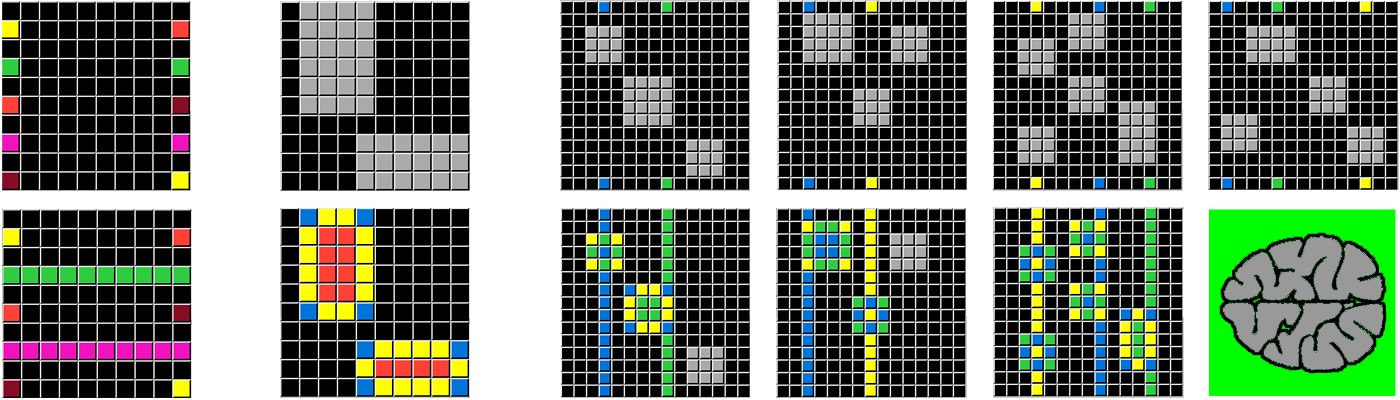
The quest for AGI — Artificial General Intelligence, is this epoch's search for the Philosopher's Stone. More resources are currently pursuing AGI than the previous quests, spurred on by the amazing results we see from Neural Network LLMs like GPT. ARCHIE is an application that competes against LLMs as a method for automating Abstract Reasoning.
Doomsday Mechanism
Flirting with Disaster July, 2024
Section is currently forbidden. But what harm could come from taking a little peek?
Forbidden Knowledge
Banished from Eden June, 2024
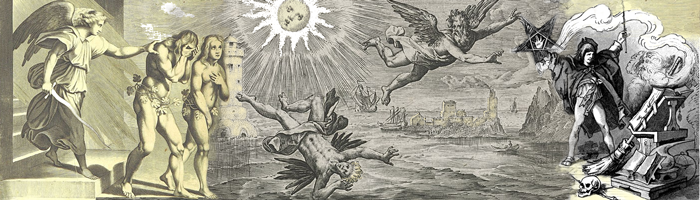
In the beginning... we were warned against knowing certain things. The "Fall of Man" and expulsion from the Garden of Eden, however, is less about the effects of certain types of information, but rather the price for disobedience. Before eating fruit from the tree of "knowlege of good and evil" how did Adam and Eve know how to be good? They followed God unquestioningly, instead of trying to make moral decisions themselves. The Fall can be seen as a parable of Adam and Eve believing they could be "like God" by their own will and effort, through knowledge.

Pareidolia
Epiphany versus Apophany May, 2024
Apophenia is a common vulnerability of human brain function. It is the misattribution of meaningful patterns within unrelated data. Taken to extremes, it forms the basis of schizophrenia, where a person is increasingly detached from reality. We risk being wrong whenever we assign meaning to a newly detected pattern. But risk is required for discovery, innovation, and the general exploration of reality.
The Elements
Building Blocks of the Universe May, 2024
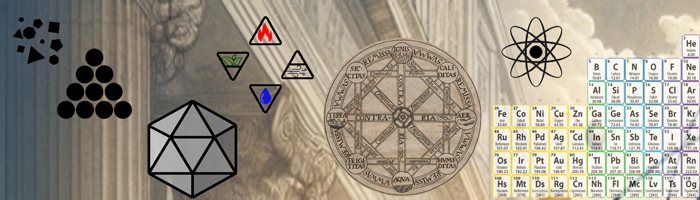
To understand the purpose of a system is good, but first you need to identify its components. In chess, the purpose of the game is to "capture your opponent's King." But first you need to know what a King is. You need to identify the pieces that can capture the King. To understand the rules of the game, you need to understand the elements.
The Universe is far more complex than a board game. But it can still be analyzed. A "magical" approach to understanding its purpose is to ascertain the intent of its Creator through a process called "divination." An alternate (cybernetic) approach is to declare "the purpose of a system is what it does."
Comprisation
Alchemy of Order April, 2024
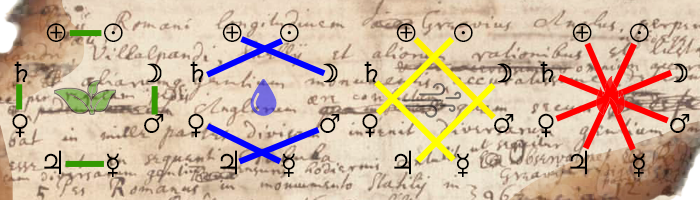
Alchemy was not merely an attempt to find the Philosopher's Stone or turn base metal into gold. It was a pursuit of uncovering ancient lost wisdom and the search for patterns of order that drive the cosmos. The desire to uncover a "divine symmetry" underlies both ancient and modern pursuits of wisdom.
Traveling Salesman Problem
One Milion Dollars if you can Solve it! April, 2024
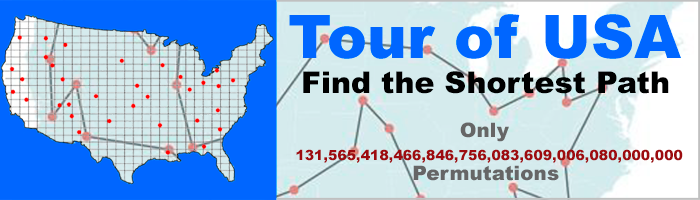
In 1962 Proctor & Gamble created an advertising campaign, offering a $10,000 prize to whomever submitted the shortest route linking 33 defined US cities. That prize was enough to buy a house at the time. And I missed it.
Finding the shortest route between a set of locations is a class of mathematical problem known as "The Traveling Salesman Problem" or TSP. It is an optimization problem, easily solved when the number of locations is very small, and seemingly impossible with larger sets. In fact, anyone who engineers the "definitive algorithm" for this problem will have solved the P=NP challenge by the Clay Mathematics Institute, and be awarded $1,000,000. Show me the money!
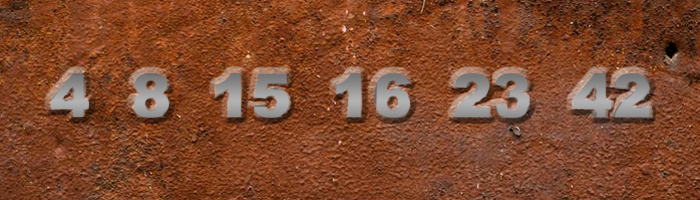
The Numbers
Lost, ChatGPT, and Prime Numbers March, 2024
Ants practice farming, crows use tools, whales have language, and chimpanzees start wars. Perhaps the unique attribute of mankind is our mystical devotion to numbers -- Homo numeris.
Numerology is the belief in the mystical relationship between numbers and the physical world. IQ is partially determined by performance on a number sequence test: Given this series of numbers, what comes next?..."
A strong indicator of general intelligence is the ability to detect patterns and thereby anticipate future events.

Speed of Life
Anchoring Orders of Magnitude March, 2024
There are modalities of thinking that don't involve language, but our vocabulary consists of concepts we arrange and rearrange while trying to navigate the world. We know language is the basis for communicating with others, but the dual role of words is often overlooked. When exploring a "thought-space," if we encounter something truly new, we need to create a word for it, to act as a map to find our way back. And to tell others. The language of large numbers is no exception.
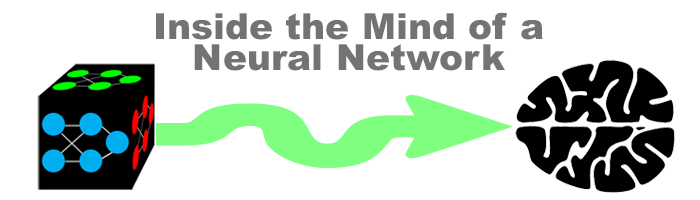
Black Boxes Were Made to be Opened...
By Creating a CT Scan of a Neural Network February, 2024
Like Artificial Sweeteners, Artificial Intelligence comes in many forms and flavors. And AI will be as incorporated into our daily lives as Splenda. But can the current incarnation of Machine Learning result in a conscious super-intelligence? One that may present an existential threat to humanity? To dig deep into what's possible I built a simple Neural Network and put it through its paces. The results were surprising.
Concepts -
Boundaries of Objectivity Alchemy Prophetic Vision Synchronicity Collective Unconscious Epiphany Natural Philosophy Armillary Sphere Conceptual Structures Language Epistemology Ontology Consciousness Intelligence Complexity Abstract Reasoning Classic AI Probabilistic AI Prime Numbers Traveling Salesman Prime Clock